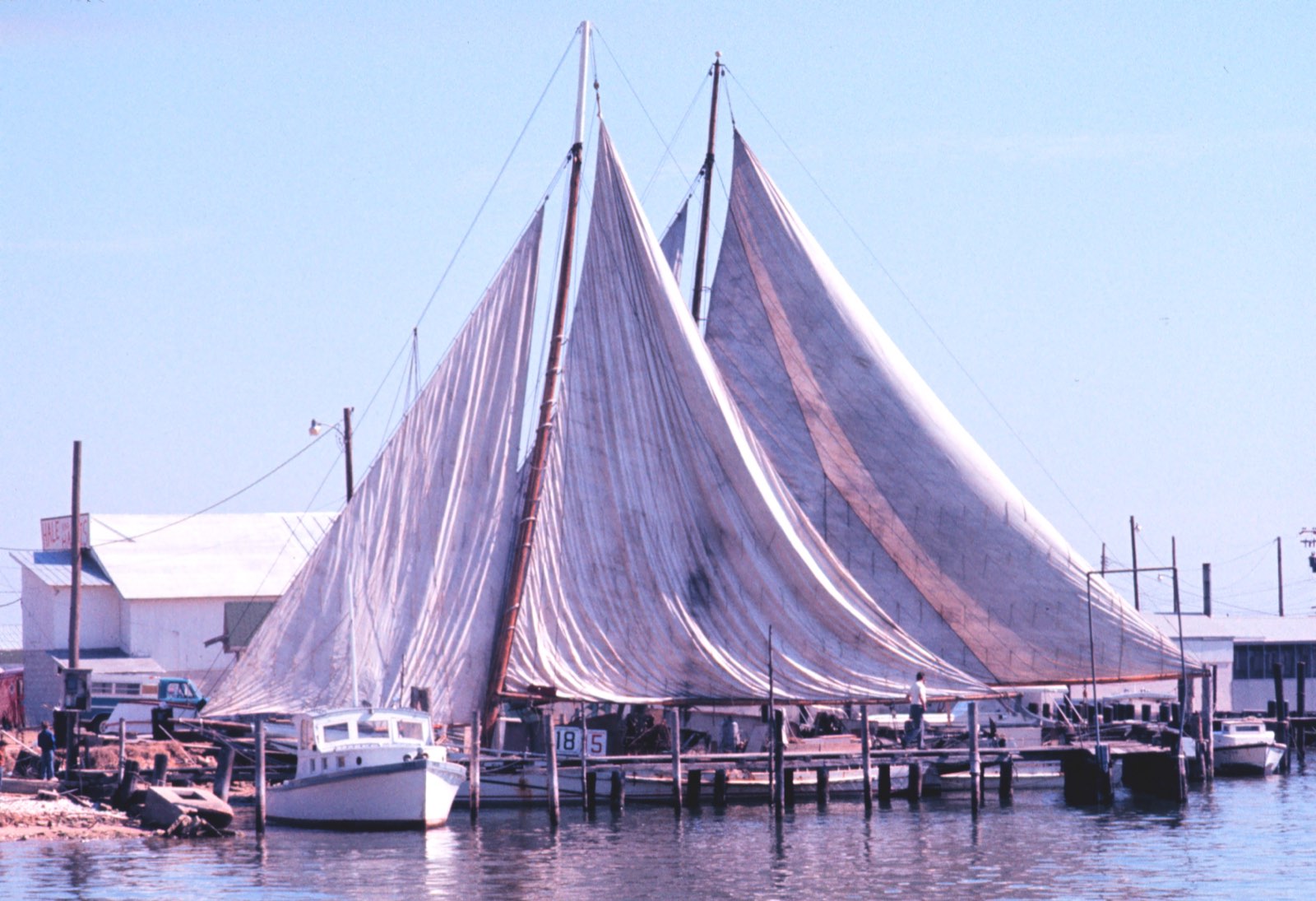

Few boats say “Chesapeake” like the skipjack. Here is the story of these oyster boats, and where you can still see them sail.
Quick answer: Skipjacks are the last working boats under sail in the United States. Watermen used them to dredge oysters in winter. They first appeared on Maryland’s Eastern Shore in the 1890s, and Maryland named the skipjack its state boat in 1985. The fleet fell from more than 80 boats in 1957 to fewer than three dozen by 1985.
Contents
- The Last Working Sailboats
- What a Skipjack Looks Like
- A Shrinking Fleet
- Landmarks and Races
- Frequently asked questions
The Last Working Sailboats
Skipjacks are the last working boats under sail in the U.S. In winter, whole fleets dredged oysters from the floor of the Bay. Watermen called it “drudgin”. It was hard, cold and sometimes dangerous work.[1]
What a Skipjack Looks Like
They are 25 to 50 feet long, with a V-shaped hull, a shallow draft and a centerboard. Each has a single mast and two sails.[1] The name comes from fish that leap out of the water, like the skipjack tuna.[1]
A Shrinking Fleet
| Year | Skipjacks |
|---|---|
| 1957 | More than 80 |
| 1985 | Fewer than three dozen licensed and working |
Source: Maryland State Archives.[1] Today few work in the oyster trade. Most that still sail carry visitors.[1]
Landmarks and Races
In 2003 the skipjack Rebecca T. Ruark, the oldest in the fleet, became a National Historic Landmark. Skipjack races are held every Labor Day weekend off Deal Island, in Somerset County.[1]
Frequently asked questions
What is a skipjack boat? A sailboat used by Chesapeake watermen to dredge oysters; the last working boats under sail in the U.S.
When did the skipjack become Maryland’s state boat? In 1985.
Where can I see skipjacks race? Off Deal Island, Somerset County, every Labor Day weekend.
References
- [1] Maryland State Archives, Maryland State Boat: Skipjack – last checked 11/08/2026
Find Deal Island and Bay towns on our map.